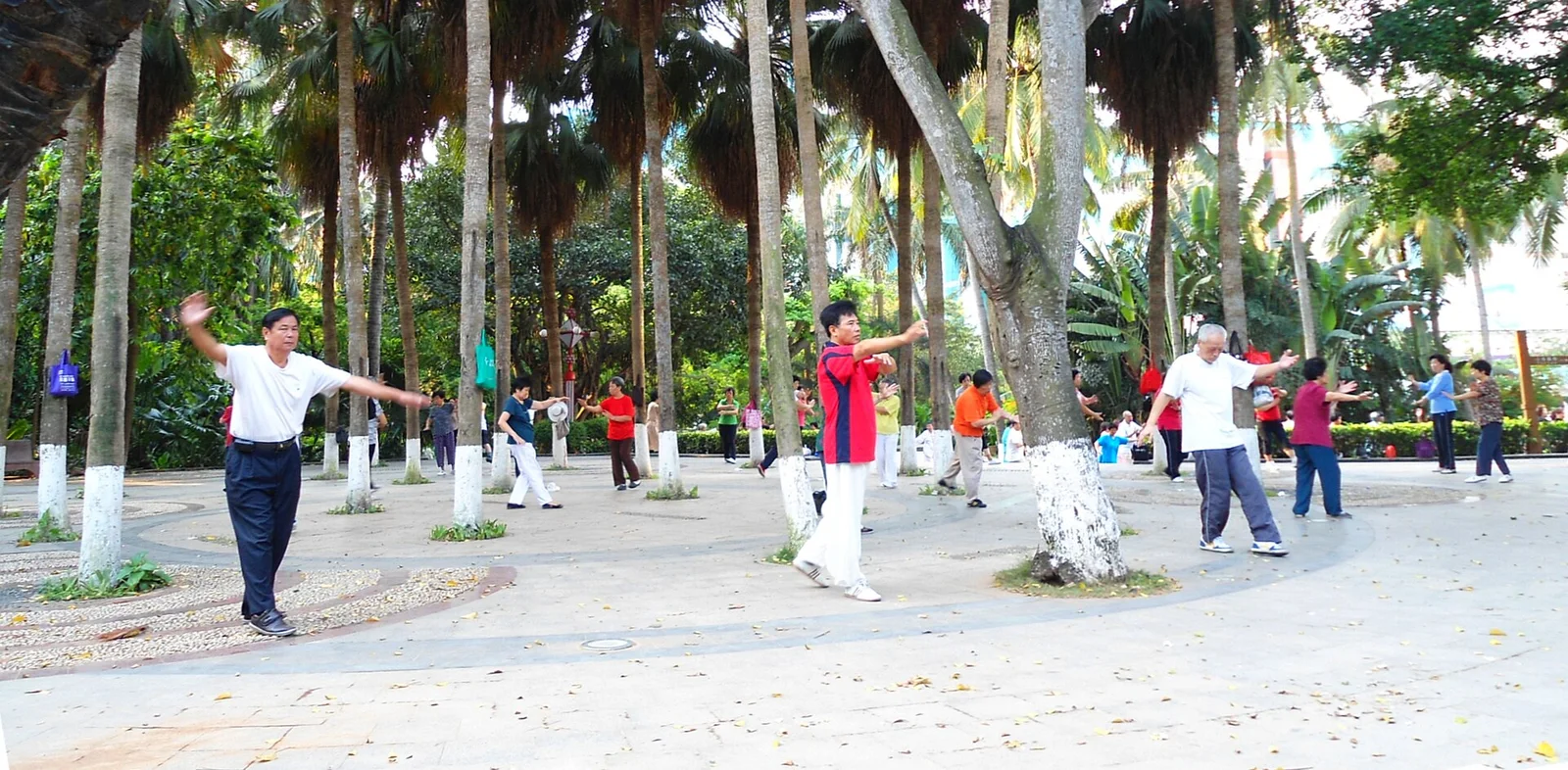
Begin as a visitor, not a spectator at a show
Taijiquan is a living physical practice recognised by UNESCO, with different schools and ways of teaching. People practising in a park may be following their own routine rather than presenting an activity for tourists.
Leave room around the group and observe without stepping into its movement. Ask before taking close photographs, and accept a refusal without turning the encounter into a negotiation.
Do not build a promise around a casual sighting
Practice times, groups and locations can vary. A photograph from a previous trip does not guarantee the same gathering on your morning. If you simply want to watch, treat it as a possible part of a park walk with other things to enjoy.
If participation is important, arrange a lesson with a named teacher rather than relying on strangers to interrupt their practice and instruct you.
Make a lesson specific
Ask what the session introduces, how long it lasts, the teaching language and whether it is suitable for complete beginners. Explain any practical limitations that affect standing, stepping or balance so the teacher can describe the format before you commit.
Choose comfortable clothing and a manageable schedule. Keep the aim modest: understand a few movements and the way the teacher connects them, rather than expecting to master a complete form during a holiday.
Keep the rest of the morning gentle
Pair the session with breakfast or a short neighbourhood walk. Allow time to change plans if weather makes the outdoor setting unsuitable, and agree the alternative with the organiser in advance. This is a cultural activity, not a promised health treatment. For a quieter seated encounter on another day, guqin listening provides a different way to slow the pace of a China journey.