Understand the setting
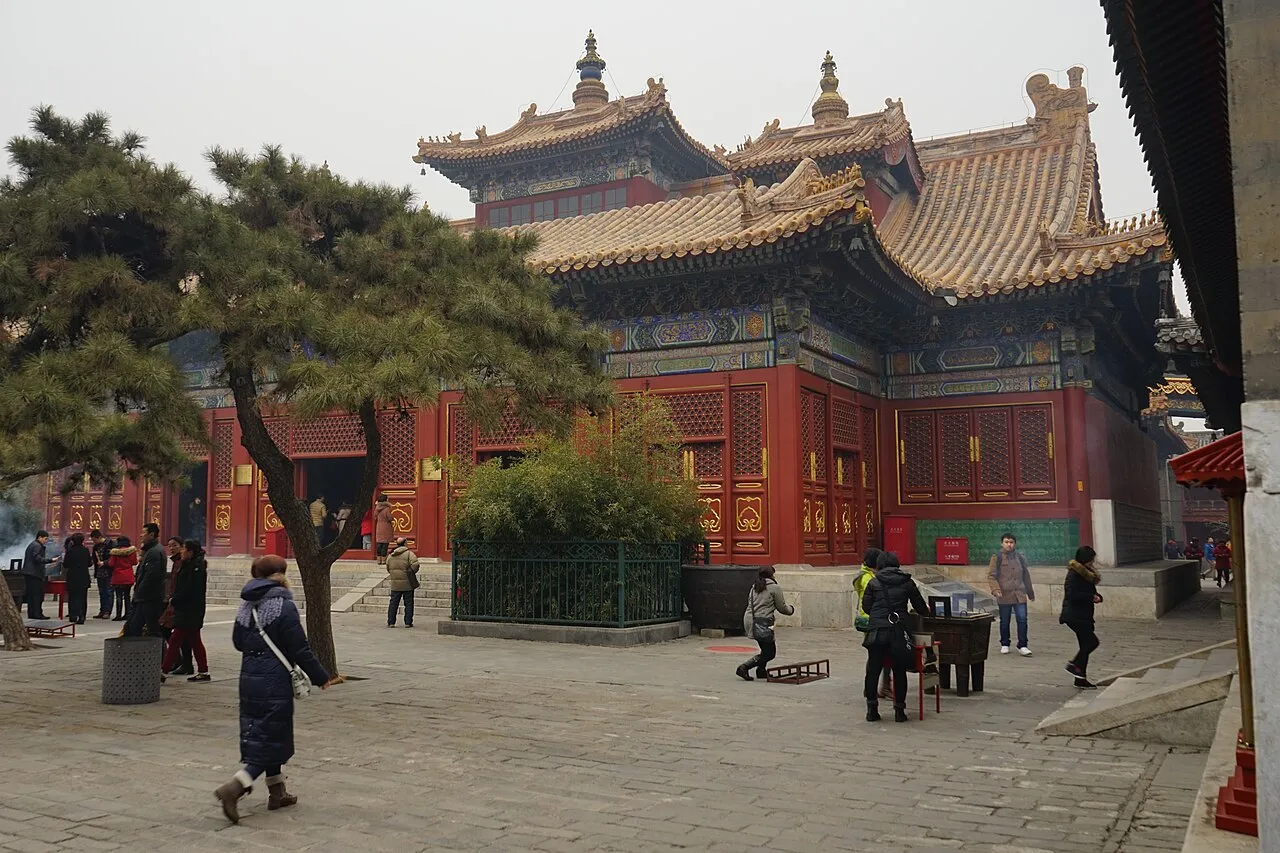
Yonghegong developed from a Qing princely residence into an imperial Buddhist monastery. Its succession of gates and halls makes the approach part of the experience. Rather than treating it solely as a photo stop, notice how people move through the courtyards and where quiet observation is appropriate.
A thoughtful route through the temple
Follow the signed visitor circulation and pause outside each hall before entering. Compare painted beams, roof details and the scale of successive spaces. Read the interpretation available near the displays. If you want a fuller explanation of Buddhist imagery, arrange a guide rather than relying on guessed meanings from photographs.
Allow enough time
We suggest one and a half to two hours for an unhurried first visit. Leave extra room around major religious dates and busy holidays. Do not attach a tightly timed restaurant reservation to the exact moment you expect to finish; the pace inside can depend on queues and the movement of worshippers.
Entry and etiquette
Check the temple’s current admission arrangements and use the document specified by your booking channel. Photography rules can differ between courtyards and halls. Follow signs, keep voices low and avoid standing in front of people praying. Incense or ritual participation is a personal choice, not a requirement of a sightseeing visit.
What can I combine with Yonghegong?
Choose a nearby neighbourhood walk or the Confucius Temple and Imperial College area if time permits. Leave space for lunch and compare opening arrangements before committing to both. This makes a more coherent half day than crossing Beijing immediately after the temple.