Choose the base before choosing the room
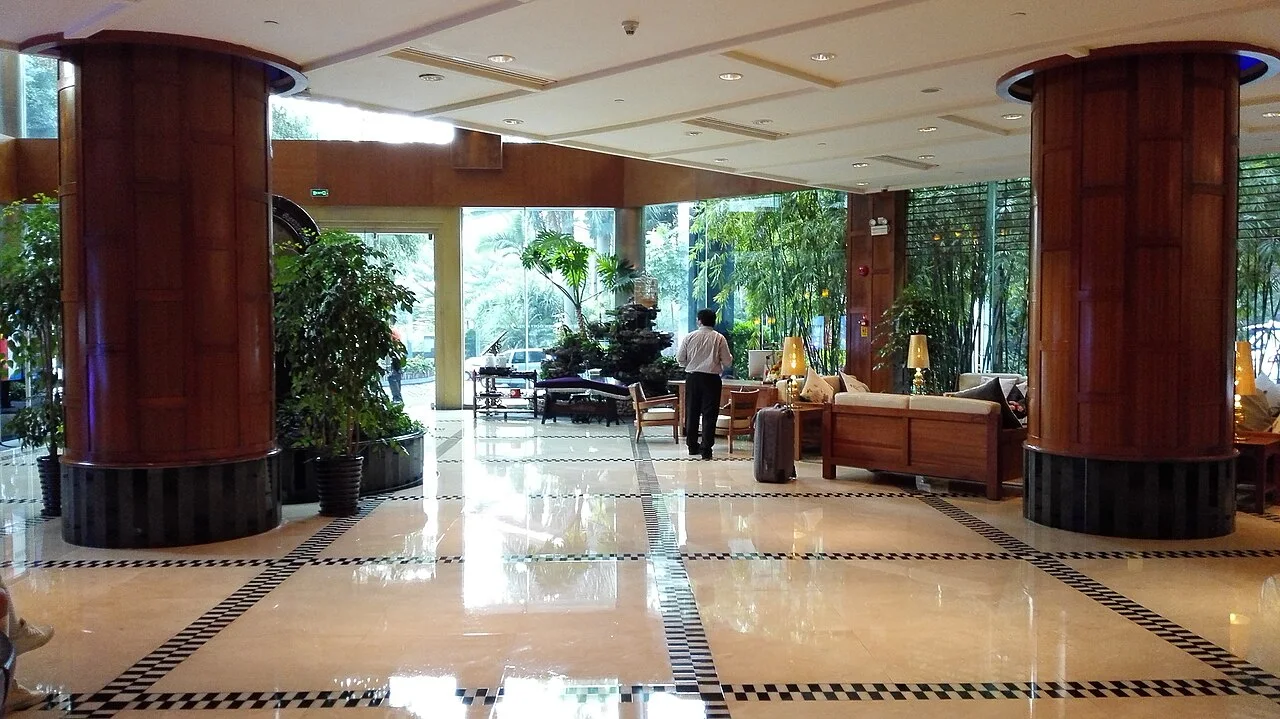
A good China hotel should make the day easier: a manageable arrival, a useful location for your activities, and a room that suits everyone staying in it. Start with the route and transfer days, then compare the property and room. A photograph of a beautiful lobby tells you little about the walk from the vehicle drop-off or the early journey to the station.
This guide is for visitors planning mainland China travel. It covers selection and booking questions, not a list of hotels with guaranteed availability. Official references were checked on 20 November 2026. Keep written confirmation for the particular property, dates and guests you book.
Can foreign visitors book hotels in China?
The 2024 notice from the Ministry of Commerce and other authorities says authorities and booking platforms should not use qualification requirements to restrict accommodation providers from receiving overseas guests. It also addresses unlawful notices refusing those guests. An old claim that a hotel needs a special “foreigner licence” is not a sound way to choose accommodation.
For a smooth arrival, contact the specific property about the documents each guest will use, the arrival time and how check-in is handled. This is a practical booking check, not a claim that nationality alone is a valid reason to refuse a stay. A platform listing, a customer-service reply and a confirmed reservation are different records; keep the final details together.
If the name on a booking differs from the traveller’s document, resolve it through the hotel or booking provider before arrival. Do not guess a substitute Chinese name to make a form accept the booking. For a family or mixed-document group, include everyone when confirming the arrangement.
Compare these details before payment
Scroll sideways to see all columns.
| Detail | Ask the property | Keep in your booking record |
|---|---|---|
| Room | Exact category, bed count and bed sizes | The booked room, not only a sample photo |
| Occupancy | Adults, children and any extra bed or cot | Allowed occupancy and any agreed extra charge |
| Meals | Breakfast inclusion and serving time | Which guests and days are covered |
| Arrival | Reception hours and late-arrival procedure | Expected arrival and a working contact |
| Payment | Room balance, deposit and accepted method | What is prepaid and what remains due |
| Changes | Cancellation deadline and no-show conditions | The terms of the selected rate |
Compare the whole stay rather than only a nightly headline price. For example, two rooms with breakfast and a confirmed late arrival may serve a family better than a cheaper room that cannot accommodate everyone. Do not treat a request for adjoining rooms, a view or an extra bed as confirmed unless it appears in the property’s response or booking terms.
Match the location to your itinerary
The examples below are starting points for comparing areas, not endorsements of every property in them. Check the precise address and your actual daily route before booking.
Scroll sideways to see all columns.
| City | Areas to compare | Route question to settle |
|---|---|---|
| Beijing | Wangfujing or Qianmen for a history-focused stay | How will you reach your booked sights and the departure station? |
| Shanghai | The Bund or People’s Square for central sightseeing | Which side of the river suits your plans and transfer? |
| Chengdu | Tianfu Square or Chunxi Road for city time | How does the hotel fit a panda excursion and onward travel? |
| Zhangjiajie | Wulingyuan or the city area | Are you prioritising the forest park, Tianmen Mountain or a transfer? |
Use the Beijing, Shanghai, Chengdu and Zhangjiajie planning pages to compare the days before fixing the accommodation. Avoid changing hotels just to be closer to one short stop unless the time saved outweighs packing, checkout and moving luggage.
For an old-town or hillside stay, ask where a vehicle can stop, whether steps remain, and how luggage reaches reception. “Near the station” should be checked against the exact station on the ticket. For an early flight, compare the full departure routine rather than only the map distance.
Foreign-passport check-in and accommodation registration
Bring the valid travel or identity document agreed for the booking, and keep the reservation details accessible. If a passport has been lost, replaced or is held for an official process, contact the property and relevant authorities about acceptable documentation rather than relying on a phone photograph alone.
NIA guidance on accommodation registration distinguishes the arrangements: hotels register their guests; for a private home or other non-hotel accommodation, the visitor or host must register within 24 hours. Ask a host how registration will be completed before choosing a private stay. The marketing label “apartment” does not, by itself, explain who handles registration.
The September 2026 NIA announcement published by Guangzhou Public Security introduced nationwide online registration for non-hotel stays through NIA’s official services, while retaining the in-person route. For instructions and support, start with the official service. The Shanghai registration guide also explains that visa-exempt visitors still need accommodation registration. These are separate questions from whether a room is available.
Payments, deposits and late arrivals
Ask what has already been paid and what the hotel will collect on arrival. Check the deposit amount, accepted payment method and release procedure with the property. There is no single deposit figure to apply to every China hotel. If someone else is paying, settle the arrangement in advance instead of assuming the guest can present a different person’s card.
Our paying in China guide explains the preparation for mobile payments and a backup. For the full holiday, use the China trip cost guide to compare room nights with transport and other inclusions.
If your flight lands after midnight, give the hotel the calendar date and approximate check-in time. Ask which night needs booking and how the room will be held. If you arrive early in the morning, confirm early check-in or luggage storage separately; neither follows automatically from having a reservation for that date.
A message to send before booking
You can adapt this checklist into a message to the property or booking provider:
- We plan to stay from [check-in date] to [check-out date], arriving around [time].
- There will be [adults and children, with children’s ages].
- We need [room count, beds and any specific access requirements].
- Please confirm the check-in documents and accommodation-registration arrangements.
- Please confirm the total for this room type, breakfast, any extra bed, deposit and cancellation terms.
Send identity documents only through an appropriate channel when they are required for an actual booking. A public travel enquiry does not need passport scans or payment-card details.
Build the hotel plan around the journey
Before finalising, compare the first arrival, busiest sightseeing day and last departure for every overnight base. Save the hotel’s Chinese name, address and contact details offline using the arrival-day checklist. A realistic base makes a private tour more comfortable without requiring the most expensive room each night.
For help arranging the route and accommodation together, leave your plans through Custom. Contact information is the only required field. Our travel designer will follow up and discuss suitable hotels; an overnight city in a proposed itinerary is not yet a reserved room.