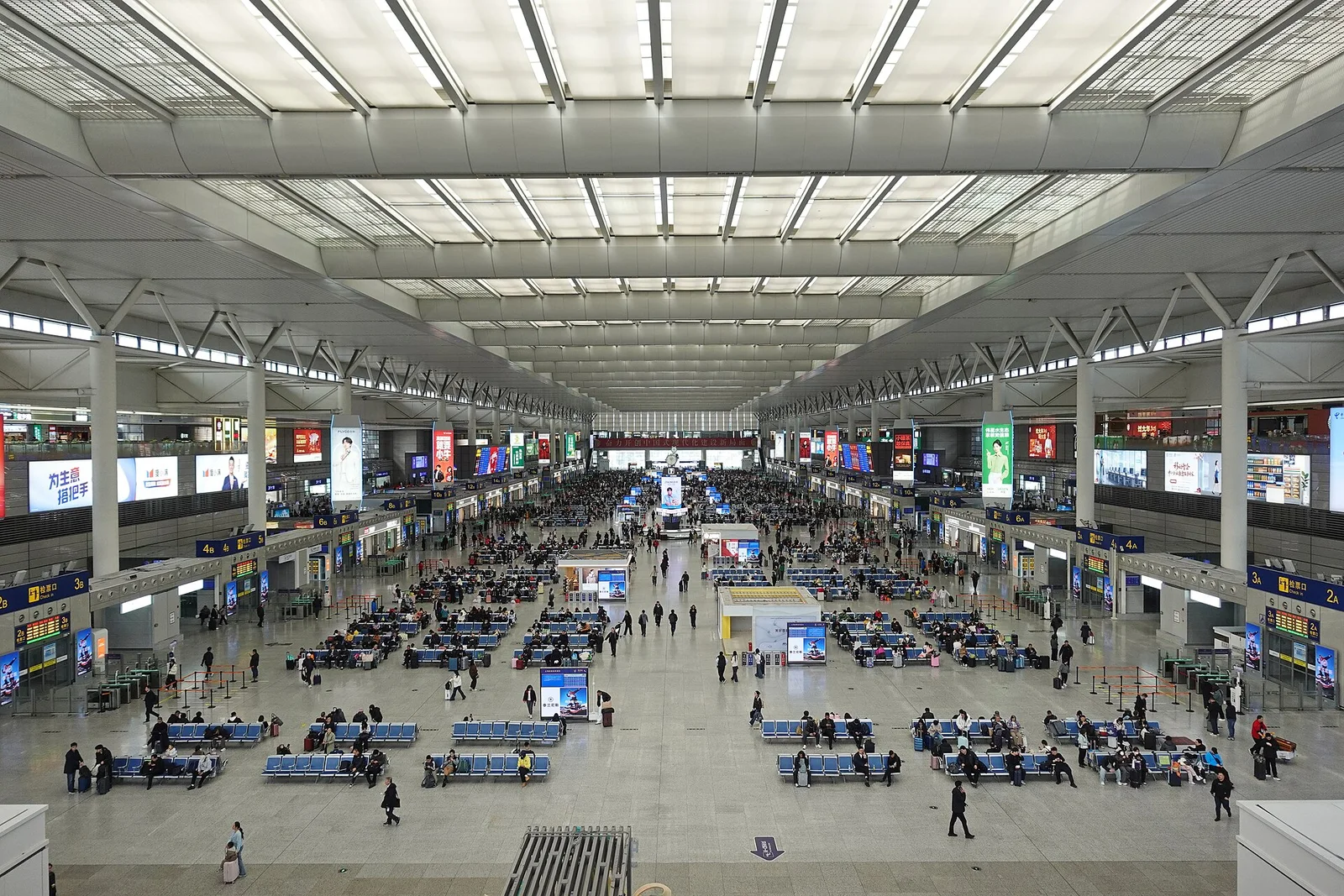
Match the complete station names
Start by comparing the arrival station of the first train with the departure station of the second. The same city name does not mean the same building. A suffix such as South, West or Hongqiao is part of the station name, not optional information.
If the stations differ, plan a separate urban transfer. Include leaving the first station, locating the vehicle or metro, traffic or interchange time, and entry procedures at the second station.
Build a connection around the travellers
There is no single comfortable connection time for every Chinese station. Luggage, walking speed, unfamiliar signs, lifts and passport checks all affect the margin you need. Compare the operator's permitted connection with the time that would feel comfortable for your group.
Prefer a direct train when the saving from changing is small. If a connection is necessary, avoid making the last onward departure of the day your only workable option.
Follow the station's transfer instructions
Check whether a transfer route is available for your arrival and onward service. Follow current signs and staff directions rather than leaving the station automatically. Some journeys may require exit and re-entry; confirm the process for that specific connection.
Keep both booking details accessible. If the first train runs late, tell onboard staff what you are connecting to and contact the booking channel. Do not assume a separate onward reservation will be changed automatically.
Give a cross-city change its own plan
Write the second station's Chinese name into your transfer booking and agree a meeting point outside the first station. Leave space for a meal or a rest if the connection is long. If the gap is short enough to make everyone watch the clock, reconsider the itinerary rather than relying on an unusually fast taxi. Our luggage guide helps assess the physical side of the transfer.